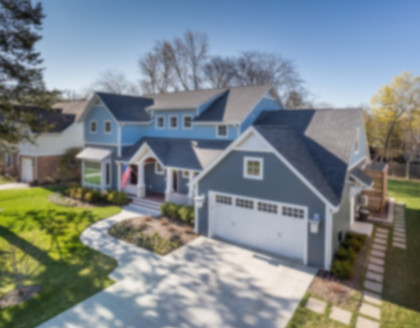

Jeff Ralston with Ralston Eco Homes is building high-performance homes in the Cedar Rapids, Iowa area designed to be energy efficient, comfortable, and durable enough to withstand Iowa’s demanding climate. Their goal is to build homes that provide year-round comfort and very low energy consumption, with the potential to achieve complete energy independence if desired.
Just as important, Ralston Eco Homes recognizes that a high-performance home should support the health and well-being of the people who live in it. This approach makes healthy indoor air, smart ventilation, and intelligent indoor air quality management integral parts of the home’s design and a natural fit for the CERV.
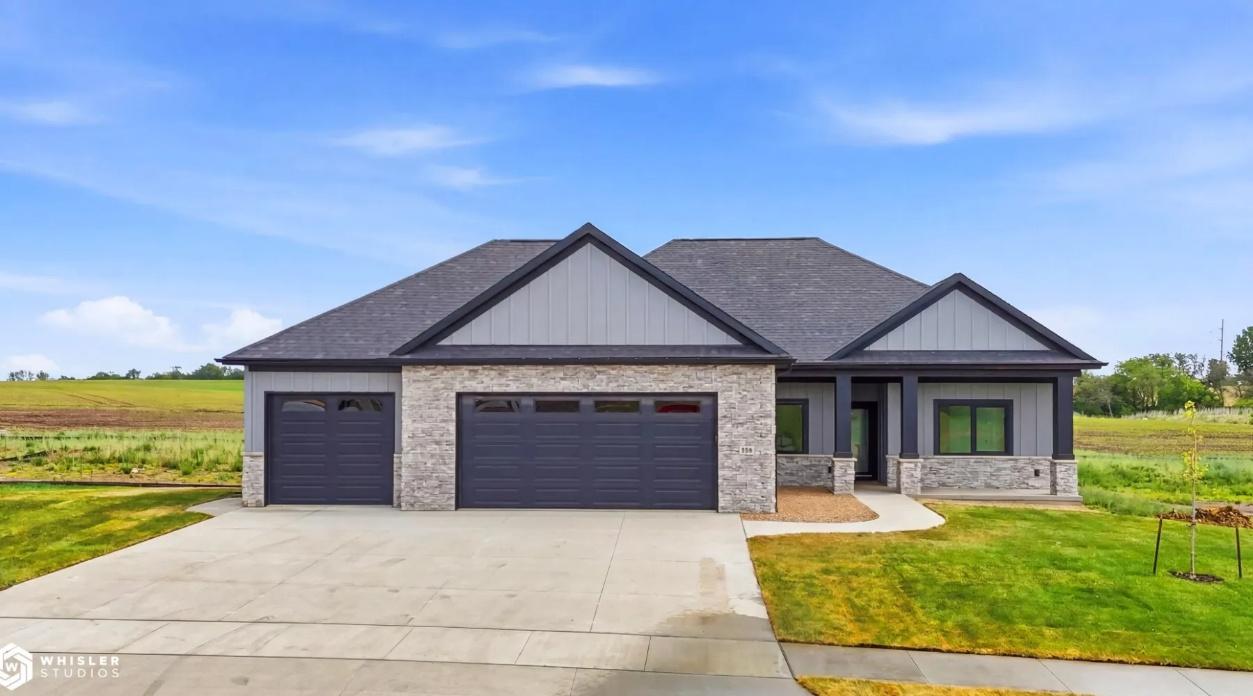
The latest Ralston Eco Home, located in Swisher, Iowa, is a great example of this approach. The project recently achieved PHIUS certification.
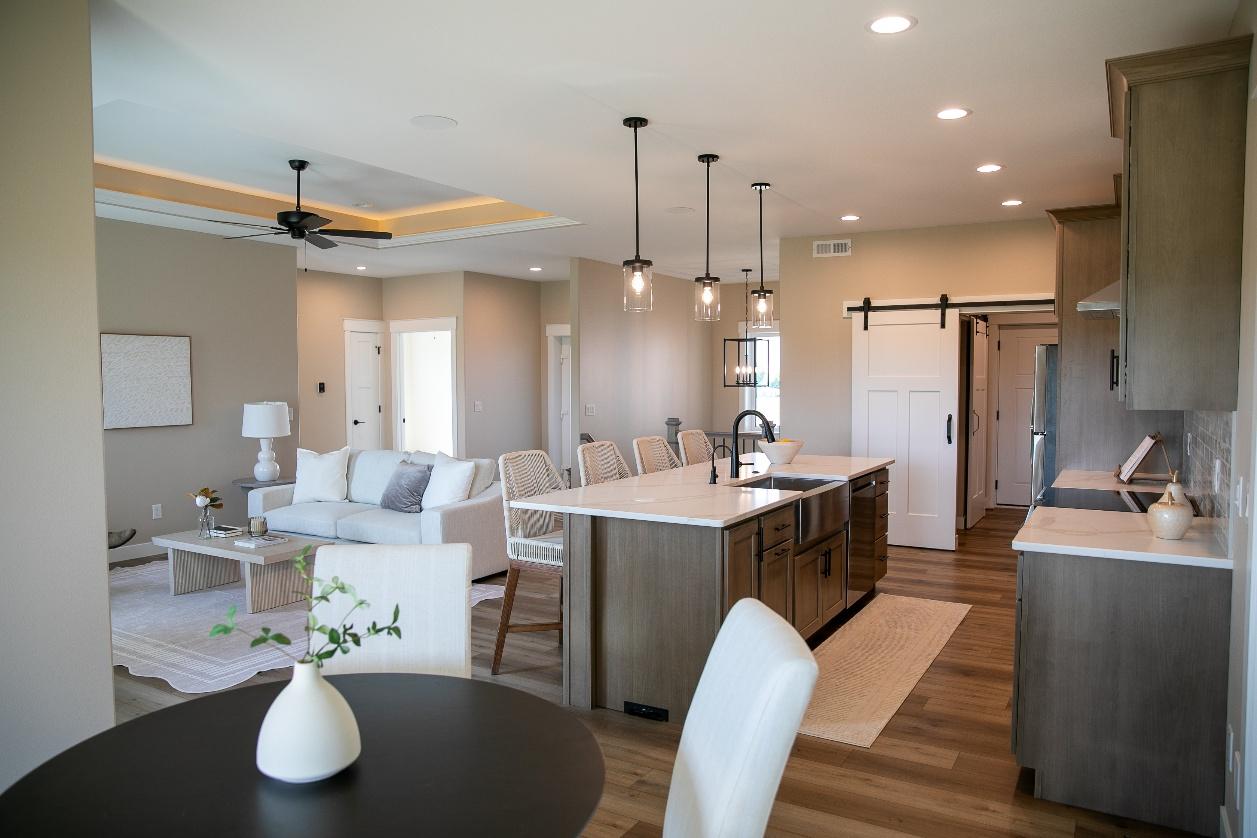
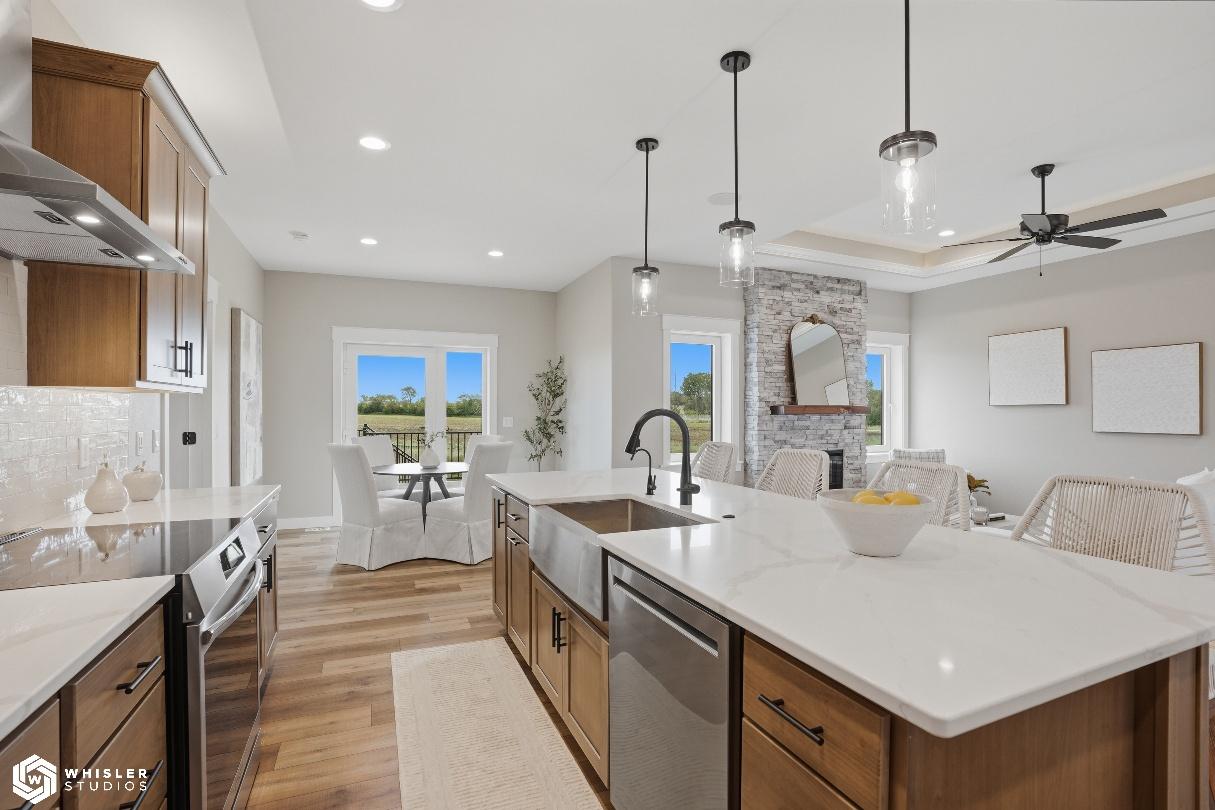
At Build Equinox, we always enjoy seeing the CERV become part of a high-performance home, where builders rely on the CERV to maintain healthy indoor air quality while providing homeowners with peace of mind that the air inside their home is continuously monitored and managed.
We especially value the opportunity to hear directly from the builders and developers who bring these projects to life. We are very happy that Jeff offered to share the story of the Ralston Eco Home in his own words:
Building the Ralston Eco Home
Article written by Jeff Ralston
There has been a lot of controversy in my little corner of east-central Iowa surrounding energy production. While the state has gone all in for ethanol and wind power, utility-scale solar has become a flash point. As a counterpoint, I resolved to demonstrate the utility of building homes that simply use less energy.
Iowa also has the second-highest cancer incidence nationally and is one of the few states where cancer rates are rising. While the causes of cancer are multifactorial, indoor air quality plays a role. In 2021, Todd Richardson and I set out to build a market-proven floor plan that achieved DOE Zero Energy Ready Home (ZERH) certification. These homes are third-party verified to be significantly more energy efficient than a code-built home and also meet EPA Indoor AirPlus requirements. Ultimately, we built seven DOE ZERH homes using relatively conventional techniques.
After achieving success with this level of high-performance building, I decided to build a passive house. Passive homes call for high levels of insulation, high-performance windows, no thermal bridging, airtight construction, and heat-recovery ventilation. Mike Nolan, lead architect at Horizon Architecture, and I discussed the feasibility of building a home applying PHIUS Passive House practices. PHIUS certification is often associated with highly customized projects. As a builder of spec homes, I rely on proven floor plans, predictable timelines, and established building practices. We wanted to build a PHIUS-certified home using an already proven floor plan and sell it in the local market.
Our PHIUS-certified passive house, The Ralston Eco Home, is fully electric, has rooftop solar panels, a Leviton smart panel, an EV car charger, active radon mitigation, an induction stovetop, and relies on a DOE cold-climate heat pump for heating and cooling. We use heat pump technology for the water heater, the clothes dryer, and our smart Build Equinox Conditioning Energy Recovery Ventilation (CERV) system.
PHIUS passive homes are required to have balanced ventilation with very high levels of energy recovery. The CERV2 exceeded these requirements, with the added value of a system that actively monitors indoor and outdoor air quality, allowing it to deliver fresh air when needed and recirculate air when the outdoor air is of poor quality or the indoor air is already acceptable.
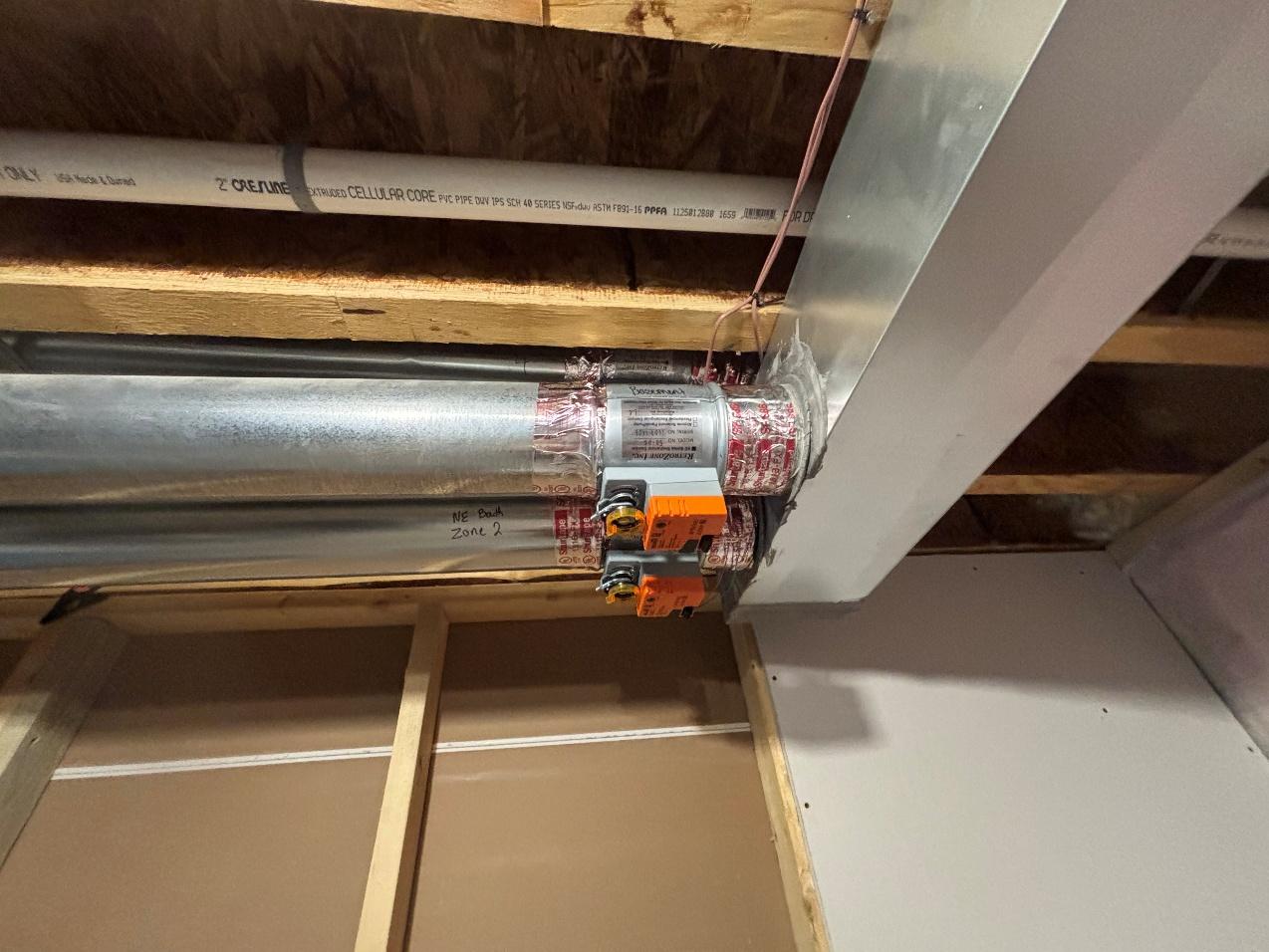
We configured our CERV unit to have independent exhaust from the bathrooms and kitchen. PHIUS requires a specific minimum amount of continuous ventilation from these rooms. This also allowed us to eliminate separate bath fans, which reduced envelope penetrations and made achieving our air-tightness requirement easier. We supplied fresh air directly to the air handler. We have zone dampers for the kitchen and bathrooms, triggered by occupancy sensors in the bathrooms and an active circuit transmitter from the kitchen hood. This more simplified configuration was easier to incorporate into our floor plan and was a simple “ask” of our HVAC contractor who had no experience with the CERV2 unit.
I really enjoy monitoring the house. We have a Leviton smart panel, which allows me to follow the solar generation and the home's consumption. Smart circuit breakers let me watch specifically how much energy the hot water heater, HVAC, refrigerator, and other appliances are using. I like to make decisions based on these metrics. We also have an Airthings radon monitor to continuously watch the radon levels in the home. The CERV's ability to monitor CO2, VOCs, humidity, temperature, and particulates allows me to adjust the system to provide the homeowner with high indoor air quality and overall comfort.
Achieving Passive House certification was a great opportunity to learn more about how high-performance homes behave. While I may not seek this specific certification again in the future, I will incorporate the techniques I used in this home. I love how comfortable and quiet the house is. The windows are wonderful. I fully expect to use the CERV2 again — it's the Cadillac of energy recovery units.
End of Jeff’s Article
Integrating the CERV2 into the Project
The Ralston Eco Home integrates the CERV2 with the home’s primary cold-climate heat pump system using Duct Configuration #3 from the CERV2 installation manual.
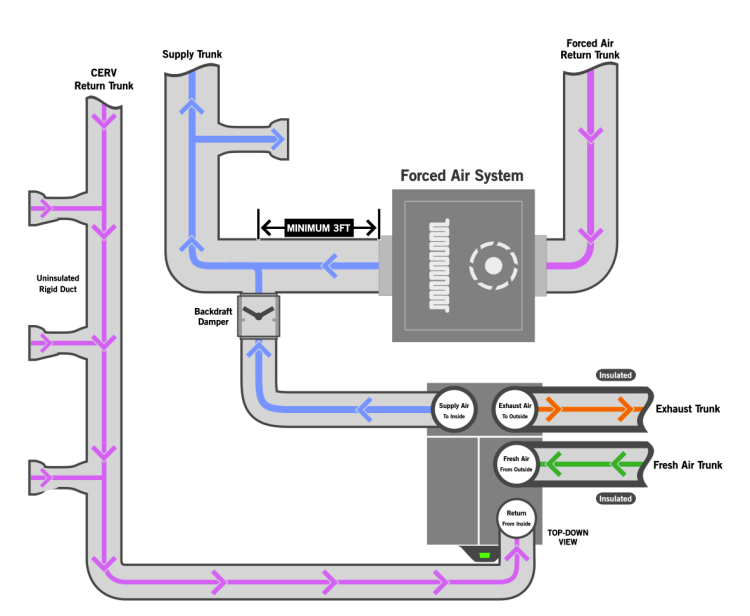
In this configuration, the CERV2 supply air connects to the main heat pump supply duct system, while dedicated CERV2 return ducts prioritize air removal from the bathrooms, kitchen, laundry area, and other locations where humidity and indoor pollutants are commonly generated. This allows the system to remove pollutants near their sources while using the central duct system to distribute fresh, conditioned air throughout the home.
In a typical Passive House configuration, the ERV has its own dedicated ventilation ductwork, while the heat pump uses a separate duct system for heating and cooling. Because this shared-duct approach represented a new configuration for the project team from a PHIUS standards and certification standpoint, PHIUS provided valuable support throughout the design and certification process. The PHIUS Certified Consultant, rater, builder/developer, and project team worked together to review the proposed configuration and verify that it met PHIUS ventilation requirements.
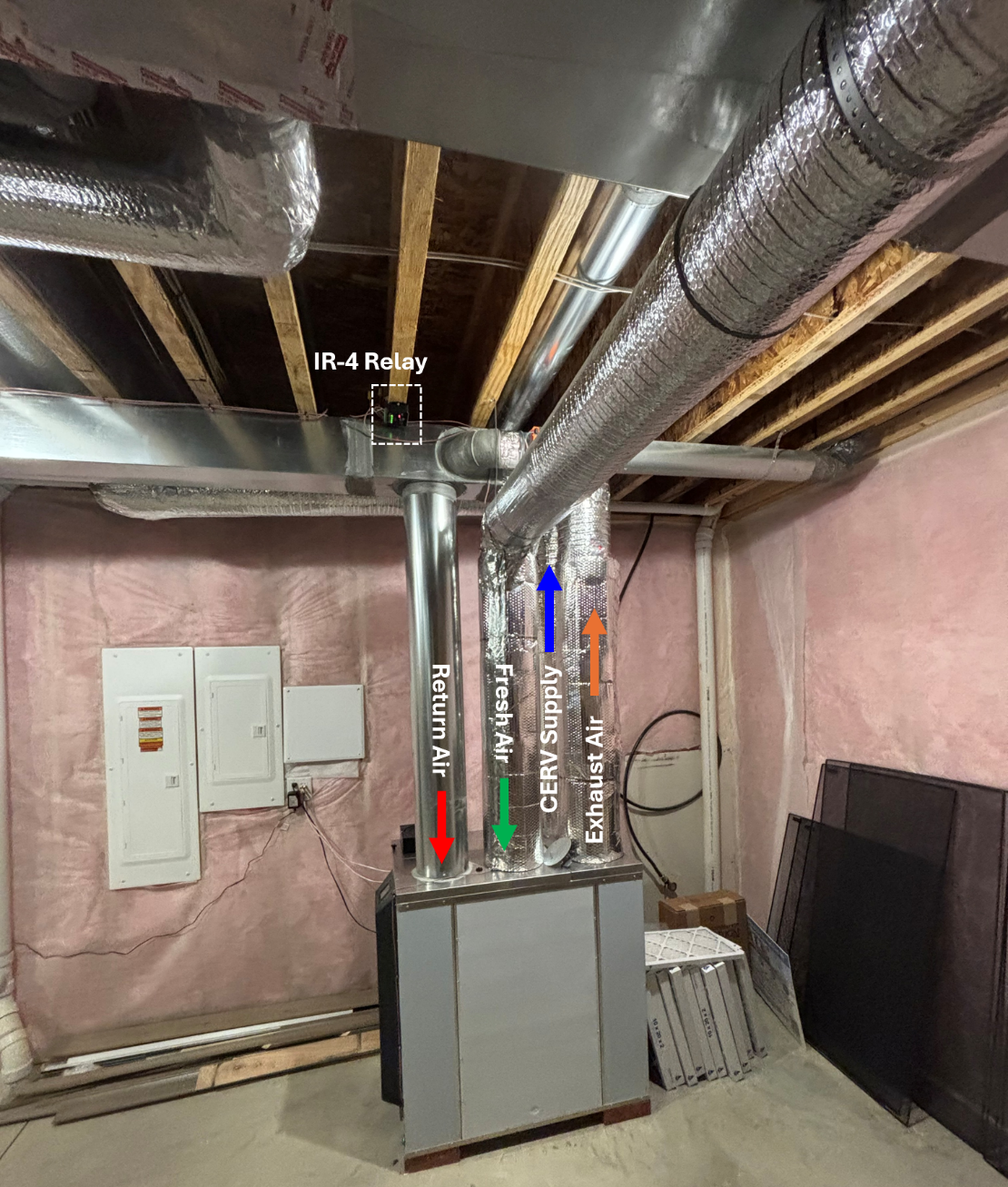
Adding Ventilation Zoning
Zone dampers were installed on the CERV return branches serving each bathroom and kitchen area. Although zoning is not required for CERV operation, the dampers allow the system to prioritize ventilation where and when it is needed, directing additional airflow to these areas when the CERV operates in Boost Ventilation Mode.
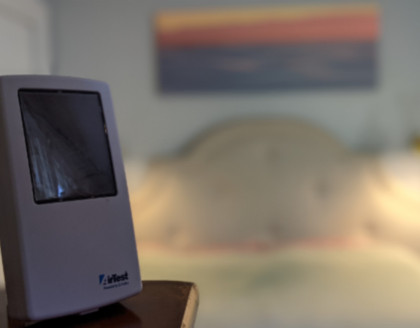
The CERV can control zone dampers through its I/O expansion capabilities or wirelessly. For the Ralston Eco Home, the system uses the CERV-IR-4 wireless relay, which communicates with the CERV and controls power to the dampers. Ventilation triggers in the bathrooms and kitchen signal when additional ventilation is needed, allowing the appropriate damper to open while the CERV increases ventilation airflow.
Monitoring Outdoor Air with Particle Defense
The air quality management system was enhanced by incorporating the Particulate Defense Kit, adding an outdoor particulate matter sensor. This allows the CERV2 to consider outdoor air quality before bringing fresh air into the home. This capability is particularly valuable in Iowa and other northern Midwestern states, where wildfire smoke from the western United States and Canada has increasingly affected outdoor air quality.
During a wildfire smoke event, outdoor particulate concentrations can become significantly higher than indoor levels. The outdoor sensor allows the CERV2 to recognize these conditions and determine when outdoor air is unsuitable for ventilation. The system can temporarily reduce or suspend ventilation and prioritize recirculation and filtration until outdoor air quality improves.